Monday, August 1, 2011

LADYBUG FACTS from WIKIPEDIA

Coccinellidae

From Wikipedia, the free encyclopedia
Coccinellidae
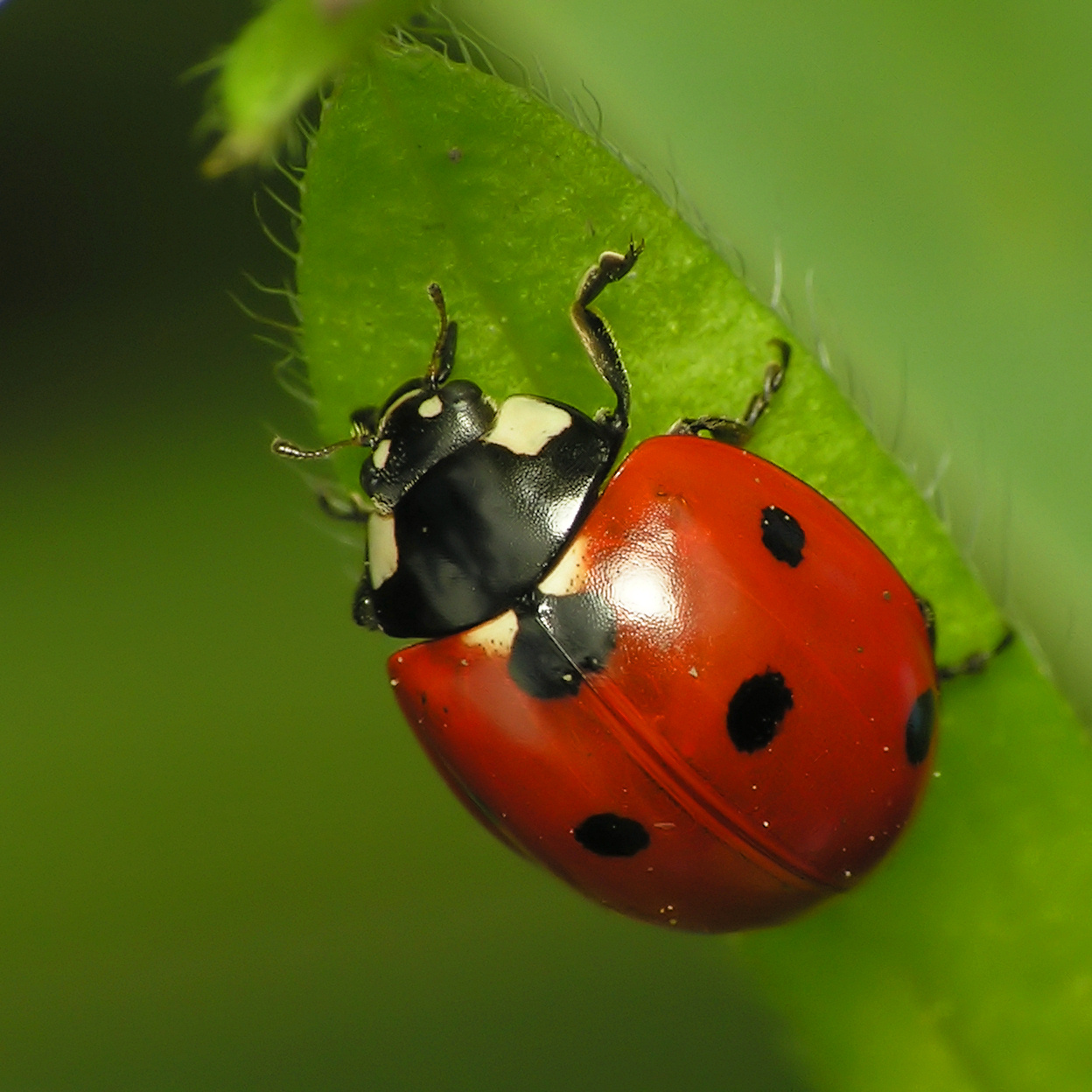
Coccinella septempunctata (seven-spotted)
Scientific classification
Kingdom: Animalia
Phylum: Arthropoda
Class: Insecta
Order: Coleoptera
Superfamily: Cucujoidea
Family: Coccinellidae
Latreille, 1807
Coccinella transversalis, elytra (wing cases) in the open position
The Coccinellidae are a family of beetles. All species are protected by noxious fluids based on cyanide, and most have warning colouration, such as red with black spots.
They are usually called lady bugs or ladybirds. Biologists prefer the term lady beetle.
Coccinellids are found worldwide, with over 5,000 species.[1] Most species are carnivorous, feeding mainly on the true bugs, the Hemiptera. Their favourite food is pests such as aphids (greenfly) or scale insects. Their larvae are also voracious (greedy) eaters of greenfly.
Harmonia axyridis (or the Harlequin ladybug) was introduced into North America from Asia in 1988 to control aphids but is now the most common species as it is out-competing many of the native species.[2] It has since spread to much of western Europe, reaching the UK in 2004.[2][3]

Contents

[hide]

[change] Defence

Coccinellids are often brightly coloured to warn potential predators. This phenomenon is called aposematism and works because predators learn by experience to associate certain prey phenotypes (appearance) with a bad taste (or worse).
Mechanical stimulation (such as by predator attack) causes "reflex bleeding" in both larval and adult ladybird beetles, in which a toxin is put through the joints of the exoskeleton, deterring feeding. This method works well; birds and cats seldom try twice.

[change] Appearance

A scientific picture of the ladybug and its body parts
A ladybug's pronotum may sometimes be mistaken for the ladybug's whole head
Most people know lady beetles as small, round, red beetles with black spots on their backs.
Not all lady beetles are red, and not all red lady beetles have spots. Some lady beetles are very little and are black and hairy. Lady beetles vary in color as red, orange, or yellow with black spots. They can also be black with red spots. Some are missing spots altogether. There are even a few kinds of ladybeetles with metallic blue iridescence, and some have checkerboard markings or stripes.
Most of the black part of the ladybeetle is the thorax, also called the pronotum. It sometimes has spots on it, and sometimes it is all black.

[change] Life and food supply

Ladybeetle larvae
Ladybeetle larvae look like strange adult insects
Most coccinellids overwinter as adults.[4] In Harmonia axyridis, eggs hatch in 3–4 days from clutches numbering from a few to several dozen. Depending on resource availability, the larvae pass through four instars over 10–14 days, after which pupation occurs. After several days, the adults become reproductively active and are able to reproduce again, though not late in the season. Total life span is 1–2 years on average.
It only takes about four weeks for the ladybeetle to transform from a tiny egg to an adult. Some females can lay up to 1,000 eggs in one summer. The ladybeetle may lay her eggs near an aphid colony, or on plants where the larvae will have a ready supply of food when they hatch.
Almost all lady beetles are insectivores, which means they eat other insects. Many of these insects have soft bodies, such as aphids. Even baby lady beetles eat other insects. Aphids are a huge problem for farmers and gardeners, and therefore a ladybug is a very good help to the farmers. Some species of ants herd aphids like sheep, and will attack a ladybeetle that tries to eat one of their aphids.

Tuesday, July 26, 2011

JOHN BUYS LADYBUGS AND RELEASES THEM

Let's Visit John's Garden. He always has the best tips for growing great veggies naturally.  John noticed that he was getting an aphid infestation.  There were more aphids than his ladybug population could handle...The solution????  BUY Ladybugs!!  Let's watch John as he walks us through the steps he uses for a Ladybug release.

John is  great gardener who loves to share the natural methods he uses. You can see that John Buys Ladybugs and uses them to control aphids in his garden. He encourages them to stay around all year but will buy more if they aren't keeping up with the pests.


If you notice that you have an infestation of aphids in your garden then follow Gardener John's lead and buy ladybugs for an easy, tried and true organic no pesticide method of control.

Watch the video and hear John's Ladybug fact for this week....did you catch it?
Ladybugs don't fly at night!! So guess why we release them at night???

Friday, July 8, 2011

WHEN APHIDS ATTACK - BUY LADYBUGS

After having had a month of rainstorms on and off, followed by two weeks of sunny southern California weather, it was time to get back out to the garden and do some weeding.  The first thing I saw were aphids.  They were everywhere!  All over everything from my beautiful roses to my sweet young tomato plants.  That's when I knew it was past time to buy ladybugs and get rid of those horrors before they totally ruined my garden.

I received my ladybugs in less than a week, and put them right into the refrigerator until the next day.  I took them out of the refrigerator in the early evening,, opened the container and sprinkled them with water (not too much) and put  the lid back on, and left them on my counter.

Then at dusk it was out to the garden with my "rainwand" to to water all the foliage on my plants.  Since the ladybugs are thirsty after their hibernation, this is an excellent way to encourage them to stick around.  It is also the primary reason to do your "ladybug release" after dark.  Since they forage and fly mostly in the daylight.

Now,  I had awakened the lady bugs and given them a drink to help them become active...if there are a few that aren't moving around yet...they probably are not dead, these are waking up more slowly.  They usually become active by the time I'm almost done with my release.

Since I don't like to handle the ladybugs a lot,  I prefer to use the shake them out method to distribute them vs the grab a handful or let them crawl all over me methods.  I still get a few that end up crawling on my hand but not many. I shake them out a few per plant and maybe an extra shake on the plants that have the worst infestation.

Now I can  go to sleep tonight knowing that in the morning those lovely little ladybugs will be out there in my garden getting rid of the invading hoards of aphids that have been plaguing it.  I also know that when harvest time comes my tomato's will be pesticide free.  Before I go to sleep tonight I think about the fact that when my garden runs out of pests for the ladybugs to eat they will move on to my neighbors yard, where I  saw aphids on her roses, and then on to the next and the next.  By the time I actually fall asleep I'm feeling really good about making an actual contribution to the environment.

Thursday, June 30, 2011

THE LIFE CYCLE OF THE LADY BUG

Here at Buy Lady Bugs I try to bring informative posts to you so that you can come to love these beneficial bugs.  This Post is about the life cycle of the ladybug.

The Lady bug goes through four stages in it's lifetime. The first three happen quickly, usually in two to four weeks, before it enters the easily recognizable red/orange adult spotted bug we all know and which can live 1-2 years.

The first stage is the egg stage.  When there is a lot of food available, ladybugs will lay their eggs in close proximity to ensure that the larvae will have food close by to get started when they hatch. They usually will try to lay their eggs on the underside of leaves, to protect and hide them from predators and the weather. A female lady bug will lay as few as 3 and as many as 1000 eggs at a time. Their eggs are usually a yellowish-orange color. Ladybug eggs generally hatch in 5-10 days.


The next stage is the larvae stage.  When they first hatch from their eggs they are often all black and somewhat triangular shaped, and as they molt they have some red/orange on them and will look like little dragons or alligators. They eat the same bugs that the adult lady bugs eat. (aphids, white flies, mealy bugs, spider mites, scale bugs, etc.)  In a very short time, depending on the food supply, they will begin to molt.  Usually in 1-3 days. If you look very closely at the leaves you may be able to see their shed skins.


The next stage of the lady bugs life is the Pupa stage.  Generally if food is available, the larva will continue to grow and shed it's skin for 9-15 days.  Then the larva's looks will begin to change. It will change color and shape. It will start to resemble a small yellowish sack with a black foot holding it to the leaf.  Over the next few days, the sack,which is called a nymph, will change shape and color as it goes through it's metamorphosis, (like the caterpillar becoming the butterfly). 


...


Then in approximately 5 days, when it breaks free of the nymph,, it comes out a light shade of pink or orange and will gain pigment and spots. Over the next 24 hours it continues to darken and harden until it becomes the ladybug we all know..bright red or orange and spotted.


I hope that you found this interesting and informative.  I hope it inspires you to try ladybugs instead of pesticides in your garden this year.  To get started, simply click on the carousel at the top of this page and
buy  lady bugs now.

Wednesday, June 29, 2011

WHAT'S SO WONDERFUL WHEN YOU BUY LADYBUGS?

What's so wonderful when you buy ladybugs is that you can order them through the mail. Yes, you can buy ladybugs and have them sent right to your home.  

An entire army of ladybugs to take on the pests (bad bugs) in your garden.   They love soft bodied insects, particularly aphids and scale insects.  So any small, soft bodied insects are what the ladybugs see as a treat and love to munch on.

You want to keep in mind that if you spray pesticides in your garden you will not only kill the "bad" bugs, you will kill the "good" beneficial insects (like honey bees,lace wings, praying mantis') as well.  Also do your really want pesticides on your fruits and veggies??


It is usually when I first see any aphids on my roses, herbs, veggie plants or fruit trees that I buy ladybugs.  They usually arrive in a week.  I place them straight into my refrigerator.  Since I generally release my ladybugs after dark, I  take them out of the refrigerator about an hour before dark and sprinkle them with water.  Then at dusk I go out and leaf water the plants and trees I plan to release them onto. Since the ladybugs have been in 'hibernation' they are usually very thirsty and will find the water drops on the leaves.  This refreshes them and they will be ready at first light to get busy eating all those pesky "bad" bugs.

I have attached a video of a ladybug release, they are releasing them in the daytime, and it doesn't look like they watered the whole garden areas where they are releasing them....this does show that there is no wrong way to do this!  Whether you refrigerate them or not, pre-water your leaves or not, the ladybugs will find their food, and will help to rid your garden of "bad" bugs.


So whether you are a farmer, a home owner, or a container gardener ladybug releases can be fun for the whole family.


To order yours now, click on the carousel at the top of this blog page and get started.


Saturday, June 25, 2011

WHEN I BUY LADY BUGS WILL THEY BITE?

I have been using ladybugs to keep my gardens pest free for many years and do not ever remember being bitten by one.  However, it is documented that they do bite. Apparently they love salt and if your skin is salty they will see you as a source.  

When releasing my ladybugs, after I have  rain-watered my plants  I gently let the ladybugs out of the bag or container directly onto the roses, tomatoes, herbs, berries, my fruit trees or whatever plant I see scale or aphids on. I don't usually handle them. I have occasionally had two or three fly up and land on me and have gently moved them off of me and back onto a plant that has their food source.

I do know that when a ladybug feels threatened an alkaloid toxin is secreted through the joints of their legs. This toxin has a noxious odor and apparently also has a nasty taste which discourages predators and will leave stains on cloth.  But as I said I really don't  handle them much.

They hang around until they have depleted their food source, and then fly away in an ever widening circle to clean the gardens of my neighbors.  I have neighbors who have commented to me that its been a few years since they had to use pesticides...but they say they would again because "see how many years it lasts?"  I just smile and watch the ladybugs crawling around on that neighbors prized roses.

The best reason I have to to use and buy ladybugs they is to help protect the environment. They also are a pretty addition to my little garden. I can say that when I harvest my veggies, I grow tomatoes, herbs, potatoes and have fruit trees, that I am glad that I am eating pesticide free produce.

Here is a video of a ladybug release, this gal uses her hands and is releasing them in the daytime but it will give you the idea...also if their bites hurt I doubt  they would be giving them to children.  I also think it shows there is no real wrong way to release them.  I usually just follow whatever instructions come with them.


Monday, June 20, 2011

HERE ARE SOME LADYBUG FACTS

Here at Buy LadyBugs  I will try to bring in some factual information, this is straight out of wiki-pedia with a video from YouTube.

Kingdom: Animalia
Click to see an enlarged picturePhylum: Arthropoda
Class: Insecta
Order: Coleoptera
Suborder: Polyphaga
Genus: Coccinella
Species: Coccinella septempunctata

Ladybug (or Ladybird)

Ladybug (or Ladybird)

Popular name of the colorful red-spotted beetle of the family Coccinellidae of the order Coleoptera. It is the subject of many folklore superstitions. It brings children, warns of danger, forecasts length of life by the number of its spots, or warns of death. In British and European folklore, the ladybird was captured by a young woman and bidden to fly "north, south, or east, or west" in the direction in which her lover lived. Whichever way the insect flew, there dwelled her future husband. A well-known children's rhyme is: "Ladybird, ladybird, fly away home, your house is on fire, and your children all roam."
"Ladybug (or Ladybird)." Encyclopedia of Occultism and Parapsychology. 2001. Encyclopedia.com. 20 Jun. 2011 


Saturday, June 18, 2011

BUY LADYBUGS AND BE GLAD TO SEE THEM FLY AWAY

So after you buy your ladybugs and release them...now what?  One of the great things about using ladybugs is that once their food source is gone they will move away to find more. This basically means that when you address your own pest problems you will ultimately be helping out your neighbors and neighborhood. Think of dropping a rock in a pond, how the ripples spread out in ever widening circles.

This is where you doing your part to change the planet comes in.  Because if you have aphids your neighbors probably do or will have them soon.  As soon as your ladybugs have eaten all your aphids and their eggs, they will seek out the next closest food source...probably your neighbor and then their neighbor and their neighbor and so on.

Think of this, you now have taken care of your own infestation and set in motion an ever widening, systematic clearing ripple of pest control in your own corner of the world.  Because you cared enough to buy ladybugs, and opted for a natural solution to your infestation, you also have cleared your neighbors infestation, and their neighbors etc., etc. This means that your neighbor, who may believe in pesticide use, won't have an infestation thereby won't have a need to purchase or use pesticides/poisons. This is why when you see your ladybugs fly away you will be smiling.

Hooray for mother earth!  You did it, you made the choice to buy ladybugs and have now set in motion a small action to prevent the use of  toxins and convert your neighborhood to a more organic approach to gardening.  Make you feel good? Then click on the carousel link at the top of this page and get started now, buy ladybugs and start improving your corner of this world.

Friday, June 17, 2011

WHY BUY LADYBUGS?

Whether you are a veteran gardener or this is your first tomato season, grow veggies or other plants, grow indoors or outdoors, why would you ever want to use poisons/pesticides on your plants? Some good reasons to buy ladybugs are, but not limited to: allergies, children, pets, not wanting poisons on your veggies or on the plants in your home/garden.

As I said in my profile, I like to make choices which are good for our planet. It makes me feel good about myself.  Since the majority of my gardening is veggies in planters, burlap bags and in pots, and many of them  are indoors, I am perhaps more aware of not using pesticides/poisons.

The best solution I have found are believe it or not, is to buy ladybugs.  I  first tried ladybugs about 30 years ago, when my rose garden was being eaten alive by aphids.  My roses were planted in a courtyard outside windows and doors to bedrooms, our living room and our kitchenAfter trying liquid sprays and powders which coincided with foul odors and headaches I came across an ad in the Mother Earth News about buying Ladybugs and decided to try some. Needless to say I became a convert and have been using Ladybugs for pest control ever since.


If you have never used them, or just haven't used them in awhile, try them, they are effective, cute, educational for kids, safe for kids, pets, and won't poison your veggies.