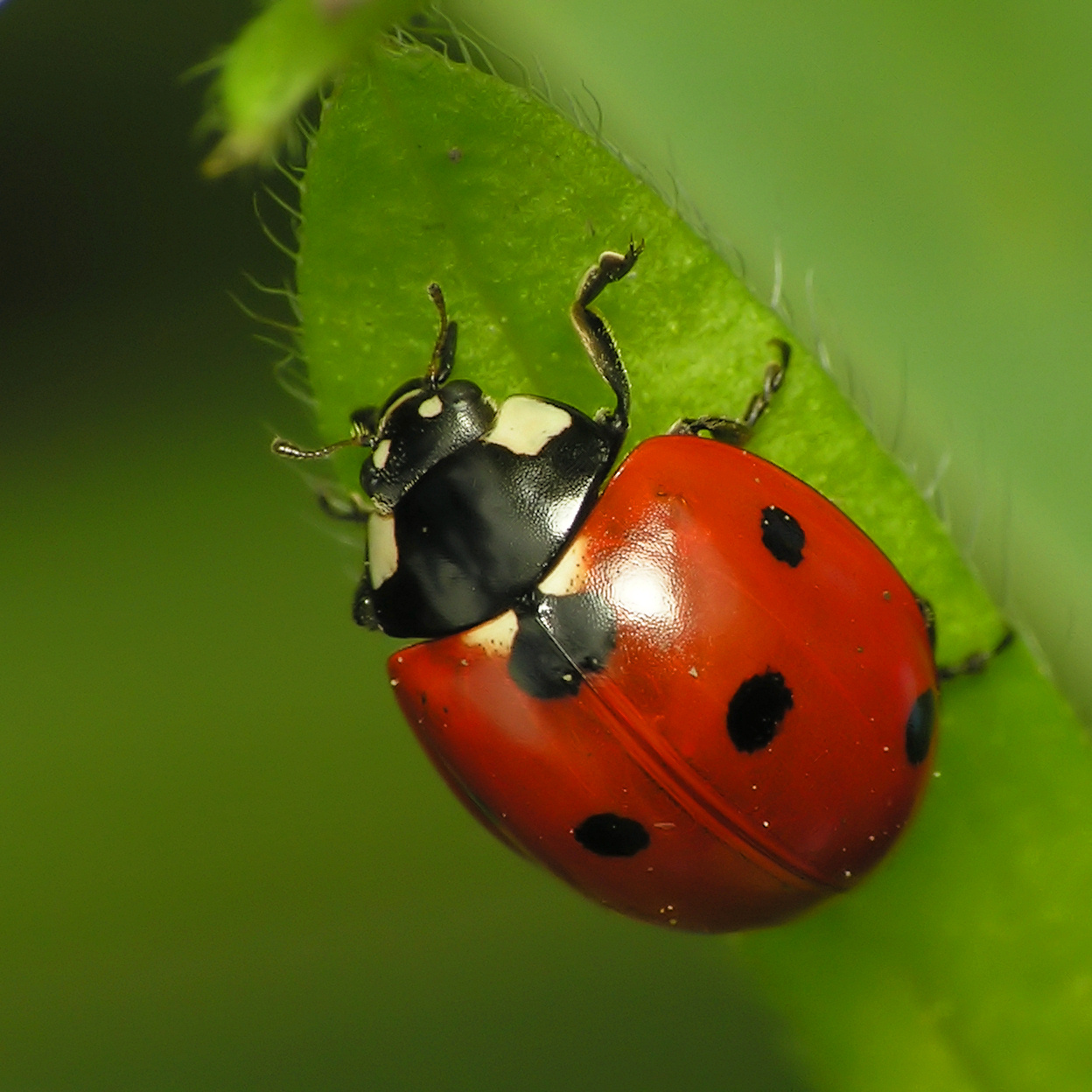
The Lady bug goes through four stages in it's lifetime. The first three happen quickly, usually in two to four weeks, before it enters the easily recognizable red/orange adult spotted bug we all know and which can live 1-2 years.
The first stage is the egg stage. When there is a lot of food available, ladybugs will lay their eggs in close proximity to ensure that the larvae will have food close by to get started when they hatch. They usually will try to lay their eggs on the underside of leaves, to protect and hide them from predators and the weather. A female lady bug will lay as few as 3 and as many as 1000 eggs at a time. Their eggs are usually a yellowish-orange color. Ladybug eggs generally hatch in 5-10 days.
The next stage is the larvae stage. When they first hatch from their eggs they are often all black and somewhat triangular shaped, and as they molt they have some red/orange on them and will look like little dragons or alligators. They eat the same bugs that the adult lady bugs eat. (aphids, white flies, mealy bugs, spider mites, scale bugs, etc.) In a very short time, depending on the food supply, they will begin to molt. Usually in 1-3 days. If you look very closely at the leaves you may be able to see their shed skins.
The next stage of the lady bugs life is the Pupa stage. Generally if food is available, the larva will continue to grow and shed it's skin for 9-15 days. Then the larva's looks will begin to change. It will change color and shape. It will start to resemble a small yellowish sack with a black foot holding it to the leaf. Over the next few days, the sack,which is called a nymph, will change shape and color as it goes through it's metamorphosis, (like the caterpillar becoming the butterfly).
Then in approximately 5 days, when it breaks free of the nymph,, it comes out a light shade of pink or orange and will gain pigment and spots. Over the next 24 hours it continues to darken and harden until it becomes the ladybug we all know..bright red or orange and spotted.
I hope that you found this interesting and informative. I hope it inspires you to try ladybugs instead of pesticides in your garden this year. To get started, simply click on the carousel at the top of this page and
buy lady bugs now.